Showing posts with label Medical Madness. Show all posts

Thursday, February 14, 2013

On Complacency....and Pregnancy Weight Gain

No one strives to be complacent. In any sphere of life. But I believe there are so many instances in life where we are lulled into complacency, even encouraged to be complacent. Weight gain during pregnancy is one such situation. Clearly, when normal weight women become pregnant, they need to gain weight. Fetuses and all the support structures they require weigh something. And people who start out thin (or healthy), will need to gain lbs corresponding to these structures. But how much? What should this weight distribution be? How do fit women balance eating with the decrease in exercise intensity that inevitably is a part of a healthy pregnancy?

I am doing many things well during my pregnancy. But there are things I wish I had done differently and changes I plan to employ going forward. When I first became pregnant, I immediately changed my exercise intensity intentionally, but unintentionally also decreased my frequency due to fatigue. The amount of calories I took in probably decreased from baseline (though I wasn't keeping track) and my hunger level definitely decreased which made sense given my decrease in exercise. But I didn't play close attention to what I was eating and aside from keeping up my running mileage enough to complete my marathons, I didn't have specific exercise goals. Looking back, I should have started tracking what and how much I was eating more closely and set some specific non-running goals for myself. And I should have incorporated more weight training (but that's the story of my life, in general, not just during pregnancy!)

My 2nd trimester started off well with another marathon but quickly deteriorated from a physical fitness standpoint as I took a few days off from heavy exertion for my amniocentesis. Then some unanticipated concerns about our baby's health (don't worry, everything ended up okay) made me pretty sad for a few weeks while we were in medical limbo and I just couldn't force myself to stay as active as I should have. And I definitely wasn't paying attention to what I was eating. For the past few weeks, things have been going well. I feel great, babybison is kicking away in there, all is good. And my 45 in 45 goal (45 minutes of exercise for 45 days in a row) has really helped me to stay active. Eating wise, I have tried to not go crazy, but I have definitely been paying a bit less attention than usual to my intake. But my 14 lb weight gain at my last appointment (though I was wearing heavy boots, I like to believe it was only 12!) was shocking. But the number was less disturbing to me than the fact that I feel and look out of shape. I'm happy to gain weight in the fetus and the uterus and the amniotic fluid, but I really don't appreciate weight gain in my legs....or back....or arms. That is not pregnancy weight gain- it's complacency. And I will not continue to be complacent.

So I decided to look into the data. What is the pregnancy weight gain breakdown? How much is actually required? Where do these guidelines come from? And what do I need to do in the last 3 months to ensure the health of both my baby (weight gain) and me (no excess weight gain and the barest minimal of fitness loss).

First, a bit of history.....

Prior to the 1930s, there was a societal belief that excessive maternal weight gain led to obstetrical problems and women were actually advised to not gain more than 15 lbs. In the 1970s a few studies indicated that maternal dietary restriction correlated with low birth weight babies and the weight gain recommendation changed, somewhat arbitrarily, to 20-25 lbs. Note that all of these "studies" including the one I go into detail below are observational studies- it is not ethically possible in the modern age to rigorously study maternal weight gain. A high quality study would be one that randomly assigned some women to the currently recommended weight gain (25-30 lbs for normal weight women) versus less weight gain, and then compared outcomes. Not many women would volunteer for such a study and even if they (and their physicians) were willing, there would be no way to truly control each woman's weight gain, let alone control for all the other factors that go into maternal and fetal health (smoking, drinking, exercise, medical problems, etc).

The current weight gain recommendations come from various bodies such as the Institute of Medicine (IOM). The IOM guidelines were updated in 2009 and, interestingly, the update focused mostly on avoiding excessive weight gain particularly in overweight women.  They discuss how many women go into pregnancy already overweight and how they need to carefully limit weight gain and how women who go into pregnancy with normal weight end up gaining way too much and often don't lose it postpartum (thus remaining overweight or obese for the rest of their lives). They recommend many women spend time losing weight PRIOR to getting pregnant so as to start from a healthy weight. So we've come full circle from asking pregnant women to restrict weight gain in the 1930s to asking them to gain in the 1970s to asking them to carefully gain and even consider pre-pregnancy weight loss.

Here are the official weight gain guidelines from the IOM:


Just to give you a sense, a 5'5" woman who weights 150 lbs has an upper limit of normal BMI of ~25. More than that= overweight. Note that 27% of women of childbearing age are obese, not just overweight, but obese!

For those interested here is one of the more recent, sub-optimal, study the guidelines are based on.
This study followed ~3000 women in Brazil in the 1990s, with results recently reported in January 2013. They followed womens' weight gain in the 2nd and 3rd trimester and compared them to the 2009 IOM recommendations. What they found was interesting:

  • Roughly 50% of women had "excessive" weight gain in the 2nd and 3rd trimester
  • Women who were obese prior to pregnancy were at higher risk of gaining excess weight.
  • Mean weight gain was higher in the 2nd trimester than in the 3rd for non-obese women (good news for me, hopefully the vast majority of my weight gain is behind me!). Obese women just kept gaining.
  • "Insufficient" weight gain (defined as below the minimum as recommended by 2009 IOM) was correlated with a lower risk of c-section (statistically significant) and higher risk of pre-term birth (not statistically significant). However, note that "insufficient" weight gain during the 2nd trimester only was predictive. Being below the average during the 3rd trimester did NOT have detrimental effects. 
  • "Excessive" weight gain (defined as above the maximum as recommended by 2009 IOM) correlated with higher risk of c-section and large for gestational age babies. "Excessive" weight gain during both the 2nd and 3rd trimesters was harmful.
(Data obtained from PLOS Jan 2013)

Another interesting point is the variable weight gain recommendation in other countries. No surprise that they are lower elsewhere as compared to here in part due to smaller frames of women in some Asian countries and in part because Americans tend to think more and bigger is better (often to our detriment).
  • Japan weight gain for normal weight women- 15-26 lbs
  • UK weight gain recommendation is up to 27 lbs (Interestingly, one site's first comment was "first and foremost, it is important to accept that you are going to put on weight during pregnancy", quite contrary to the American view of "woo-hoo, bring on the ice cream, I'm eating for two!")
  • France- 19-26 lbs
  • S Africa, Ghana- 24-35 lbs

Finally, here is a estimated breakdown of where pregnancy weight gain goes. Not sure how they came up with this but I doubt is was from rigorous scientific study:

  • Baby: 7-8 pounds
  • Placenta: 1-2 pounds
  • Amniotic fluid: 2 pounds
  • Uterus: 2 pounds
  • Maternal breast tissue: 2 pounds
  • Maternal blood : 4 pounds
  • Fluids in maternal tissue: 4 pounds
  • Maternal fat and nutrient stores: 7 pounds

Source: American Pregnancy.org

Bottom line for healthy weight women: Stick with the recommendation, but feel comfortable that it's perfectly safe to stay at the lower end of the weight range. 

Bottom line for overweight and obese women: Plan to lose weight BEFORE becoming pregnant. Get healthy first before bringing a little one into the mix! If you do get pregnant while overweight/obese you must calorie count and stay active and be vigilant about minimizing weight gain.

Bottom line for me: It's normal to gain the most during the 2nd trimester. So I should be/can be careful from here on out. I'm up 14 lbs now. As long as I ensure I do not gain more than 1 lb a week b/t now and the end, both me and the baby should be a-okay. While I'm not going to start weighing myself daily, or restricting my food intake, I AM going to start counting my calories from time to time as a way to keep tabs on things and just keep myself in check. People in general (and me in particular) tend to eat more reasonable portions of healthier foods while tracking their intake. So that will be my step to avoid complacency during the next 12 weeks. That and continuing to have aggressive exercise goals (though they will change probably on a weekly basis), including my least favorite workouts of all- weight training. If I can turn some of this new found fat into muscle it will still be weight gain, right? :)




Monday, September 24, 2012

I Have Such a Cool Job

Today it really struck me what a cool job I have. After years of struggle, long hours, and really unrewarding, thankless work at near minimum wage pay despite years of post-graduate school and training, in the past year or so I've really begun to see the light at the end of the tunnel. Now as I'm approaching the end of the tunnel (1 year and 9 months until I'm done with training) the light is starting to shine directly on me. My job is really starting to rock.

Currently I spend about 1/2 of my time in outpatient clinic seeing cancer patients and the other 1/2 working on research papers. The research stuff lends flexibility to my schedule, which is great, but I don't find the work very rewarding. It's basically like writing college essays over and over. Boring stuff. Clinic, however, is wonderful. I don't mind going to clinic and when I'm there I'm happy to be there. And clinic is how I will spend 85% of my time when I am done with fellowship so I think I'm in good shape to have a happy, healthy career. I hope so, anyway.

Let me give you a few examples of why my job is so great. All day long I see patients who have recently been diagnosed with cancer (i.e. I'm the one to tell them), to those currently going through treatment that is working (yea!), to those whose treatment was working but is now failing, to those who are dying, to those who are cured. I find each type of patient rewarding in their own way.

The newly diagnosed patients are usually terrified (and rightly so) and hanging on every word you say, so words must be chosen very carefully. At the time of diagnosis, it is important to be realistic but it is also important to give hope. And most of the time, it is not hard to be hopeful. Oncology is a rapidly changing field with new drugs being approved by the FDA (Federal Drug Administration) monthly. If you spend any time at an Oncology conference or meeting, you'll soon see that the pace of change and progress is dizzying. Whenever I get an email with a new FDA approval, I feel like it's Christmas. Patients who have no chemo options one month may have multiple options the next. It's truly incredible. Even for cancers that are "the worst of the worst" like metastatic pancreatic cancer or metastatic melanoma, new drug combinations and new drugs are extending survival by months and even years. There is much to be hopeful about.

One thing I focus on with all my new patients is that everyone is different. No one can predict how one individual person will do. Recently I saw a patient who has had metastatic pancreatic cancer since 2005. He still hasn't required chemo. His quality of life is excellent- he is playing tennis and working out daily. I have many, many metastatic colon cancer patients diagnosed over 5 years ago. All have been on treatment intermittently, and many are still thriving. Metastatic lung cancer is another disease that no longer carries an eminent death sentence. Do many folks die within a few months of diagnosis? Yes, unfortunately they do. But others enjoy fantastic quality of life for years, often by only taking a chemotherapy pill. Yes, a pill. And there are more chemo pills in line to be FDA approved every day. Metastatic breast cancer patients live 5-10 years with their disease with some frequency. I don't mean to make light of these serious, life shattering, diseases. But I will say that being an Oncologist- while occasionally sad- is far from depressing with so many great advances we can offer our patients.

Not to mention the patients themselves. What an amazing privilege to be able to work with and help such strong, inspirational, caring and often hilarious folks. I don't know if nice people are more prone to cancer (I sure hope not) or if something about getting cancer makes you nice but I'm telling you there is something different about cancer patients. And their amazing families. A few quick stories from the past weeks:


  • "Thank you for telling me I have cancer". Back when I was consulting on the inpatient service, I had a lovely middle aged female patient who had melanoma (skin cancer) years ago, that was surgically removed. She came to the hospital with fatigue, vomiting, weight loss. Evaluation showed masses in her brain and her liver, places somewhat typical for recurrent- and now metastatic- melanoma. She was a savvy lady and knew what was coming from the get go, but after a few days of tests and the biopsy of the liver lesion, finally the pathology results came back so I headed to her room to officially give her and her husband the bad news. Like I said, they knew it was coming, so I didn't mince words and explained the diagnosis and what it meant in terms of treatment options at this point. I went through my careful spiel about how her disease at this point is not curable, but is certainly treatable. I gave them time to digest. I answered their questions. I passed her the Kleenex box. I held her hand. They were such a sweet couple. When we were done and I got up to leave the room, she called me back. She grabbed my hand again, looked directly in my eyes, and said "Thank you for telling me I have cancer. That must have been hard for you." Tears sprung to my eyes. Here this lovely lady has heard the worst news probably of her life and she is thanking me for telling her!! Where does she have this reserve of kindness and empathy? Absolutely incredible. I told her she was an amazing woman. She was. I'll remember her and those simple sentences for the rest of my life.
  • "Time for renovation." A few weeks ago I had a clinic patient with metastatic lung cancer. She was initially diagnosed about 2 years ago with a mass in a very dangerous place- nearly invading her heart. She responded so well to initial chemotherapy that she was able to take a chemotherapy "holiday"- a period of time off chemo where we pursue "active surveillance" with doctor visits to access for symptoms and frequent CT scans to look for disease growth. One of these scans showed a new site of metastatic disease outside of her lung, indicating disease progression. Her and her husband took this news in stride, joking that they'd have to schedule the biopsy of this new lesion around their home renovation schedule. She turned to me and said "After I was diagnosed, I never thought I'd live this long, so I decided to deal with the nasty windows and closed floor plan of our house. But now here I am, two years later, so I decided it was time to renovate!" Her husband then quipped, "Yeah, and our son borrowed money from her promising to pay it back in 3 years.....turns out he's going to have to pay up!" We all shared in a big chuckle, overjoyed that she's continuing to exceed all expectations.
  • "I have cancer, let me help you." Sadly, I have multiple, young, 20-something patients with incurable cancer of may kinds. Leukemia, colon cancer, liver cancer. It is indeed very, very sad. However, the sadness of these young adults' stories is completely overshadowed by the amazing things that they are doing with their lives. They are not sad folks to be pitied. Quite the contrary, most of them are motivating, inspirational examples of how to live the life you've been given. One of my patients is a cancer nurse, many others are actively involved in not-for-profits for adults and kids with cancer even as they continue to fight their own diseases. The grace with which these patients juggle jobs, kids, side effects and tough treatment decisions when they should be enjoying the prime of their live is amazing. Absolutely amazing. Uplifting>>sad.
I hope these stories show a bit of the empathy, wisdom, humor and selflessness of the folks I get to work with each and every day. My job is easy compared to their daily struggles. They motivate me to learn everything I can so I am best prepared to help each patient that walks through my door for the next 30 years.

So, sad? Sometimes. Depressing? Definitely not. Rewarding? Every single day. Every day I'm reminded how lucky I am to be healthy and how privileged I am to work with such great patients. I just might have the best job in the world.


Sunday, May 20, 2012

You Are Not Paying Us to Steer!

As you may recall from past 'Medical Madness' posts, in academic medicine we spend most of the morning going from patient room to patient room on "rounds". This is when we talk about each patient and make decisions about the plan going forward. As you can imagine, there is a lot of information we'd like at our fingertips as we discuss the more complicated cases. Labs, imaging, pathology, medical history in the case of the "bad historian"(**see below)...we really need a computer with us at all times.

Enter COWs. Computers On Wheels.

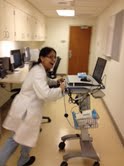
Since we are constantly on our feet we must push our computers (i.e. peripheral brains) around with us. Some places such as my alma mater, University of Chicago, are giving physicians their own iPads and I'm sure this will be the wave of the future, but for now, enter the COW:


Much like their bovine counterparts, these cows are far from perfect. They occasionally make loud incessant beeps, similar to, but more ear-piercing than, a more traditional 'moo'. Their tails (i.e. cords) can get in the way and drag behind them in a disorganized fashion. If they aren't given enough food (i.e. electric charge) they will die. And, like our farmyard friends, they can be very stubborn and difficult to move. They always seem to have a bum wheel- kinda like that grocery cart you don't want w/ the wheel that spins in circles. It can require the full attention of a highly trained medical professional to not crash these guys into the wall, our patients and each other.

Lately, our main COW has had a mean veer to the left. We take turns pushing it. We call her the Core Workout. And like most things in life, it's all fun and games until someone gets their foot rolled over...which happens...frequently.

A few weeks ago as my friend and esteemed colleague Dr Shah was pushing ole Core Workout, she had to make a right turn which is next to impossible with this particular COW. Just as she tries to make the corner a lovely elderly patient comes barreling around the corner with her IV pole getting in her daily laps for exercise. Rather than risk hitting said patient Dr. Shah aborts mission and lets the COW veer left....directly into the wall. As the patient walks by, she apologizes for the near collision. The nice lady with her IV pole with her chemo, smiles sweetly and forgivingly to Dr Shah and says "It's okay dear. We all have our problems."

Dr Shah's problem:


(Disclaimer- no physicians, patients, or computers were harmed in this re-enactment.)

**********************************************************************************
(**More medical madness style details the "bad historian". The "bad historian" is the patient who has no idea what their medical problems are or often whey they are even in the hospital. This doesn't happen as often in Oncology as it does in General Medicine, but from time to time you will come across a patient who has no idea if/what chemo they've had in the past, when they were diagnosed, etc. And there are plenty of patients who will insist, absolutely insist, that they do not have high blood pressure, only to find that they take 3 or 4 anti-hypertensive (blood pressure controlling) meds. Hmmm....For the laypeople in my audience, I implore you to make a list of your medical problems and medications to carry with you at all times. It makes us that much harder to help you if you don't!

The "bad historian" is different, but often related to, the "pan-positive review of systems" patient. The "review of systems" is the part of history taking when we ask various relevant questions that may pertain to the patient's chief complaint. For example, if someone presents with shortness of breath (which we abbreviate SOB....don't be offended, we are not calling our patients bad names.....unless we say "that sob is SOB",  just kidding of course), we will ask questions like

"have you had fevers" - might point to infection
"have you had a cough"- might point to infection or chronic lung disease
"have you had chest pain"- might point to blood clot in the lungs or heart disease
"have you had leg swelling"- again, blood clot or heart disease

We also ask about every other body system just to be sure we don't miss anything. We ask about vision, hearing, headaches, abdominal pain, constipation, diarrhea, urinary symptoms, rashes, joint pain etc, etc, etc. This line of questioning is of various utility depending on the patient. The "pan-positive review of systems" patient says yes to EVERY SINGLE QUESTION thus making the entire evaluation completely useless. Like the "bad historian" this patient has a lack of insight into what is going on in their bodies (or too much insight) which makes it a bit more difficult to hone in on the primary problem. It's important for the team to be aware that a patient is either a "bad historian" or has a "pan-positive review of systems" otherwise things they say may be given too much weight to the detriment of good clinical decision making. And when you run into these problems it is even more important to have a COW to look up the facts!

Thursday, December 29, 2011

A Day in the Life

....of a Heme/Onc fellow.

My family often asks what it is I do all day. They know I work ridiculous hours and am ridiculously busy but it's hard for them to understand what the heck I am DOING all day. So here's the play by play:

6am. Time to get up. I check facebook and email since this is the only quiet time I'll likely have for the entire day. I give myelf 5 minutes for this tops.

6:05-6:35. Get ready for work. Scrounge together some assortment of food for "lunch". The quotation marks will become more clear once we near lunchtime.

6:35-7. Drive to work.

I should stop here to explain the structure of the rotation I'm currently on. I'm on the Red service which is the inpatient service for liquid tumors- leukemia, lymphoma and multiple myeloma. Other members of my team include the attending (my boss), a senior resident, one or two interns, and a pharmacist. All of these folks change every two weeks, whereas I stay on the rotation for a month. And the switches are staggered so the team is constantly changing.

My job as the fellow is to supervise the residents and take care of 'fellow' level activities such as writing chemotherapy orders, and doing procedures like bone marrow biopsies and intrathecal chemotherapy injections. I also talk to patients about their chemo regimens, their prognosis and any other cancer related questions.

7-7:30. Prepare for "rounds". I review the past day and overnight events for those w/ active cancer related issues with special attention to the ICU patients since they are sicker and I am the primary oncology presence for them as opposed to the floor patients who have our whole team looking after them. If there's time, I start working on chemo orders or correspondence during this time.

AM: Rounds with the team. This is where we discuss each of our 14 patients in great detail reviewing past events and making decisions about next steps. We also hear about any new patients that were admitted overnight. The interns present this info. I try to stay in the background as much as possible to give the intern and resident independence to learn and take ownership of patient care, but I interject if I think they are missing an important point or making a suboptimal decision. The attending and I also use this as a time to do some teaching about oncology points as they relate to our patients. Then we go see all the patients and relay the plans to them and see how they are doing.

That's the basic structure of the morning. The afternoon is spent talking to patients, families and the primary (outpatient) oncologists, seeing the ICU patients (writing their notes and making recommendations to the primary team), and doing procdures. Oh- and attending or presenting at educational conferences.

Here's a play by play of an actual day:

7:30-9:00 round with the team

9-9:30 bring IT (spinal) chemotherapy over to the other hospital (2 blocks away) to interventional radiology where I inject the chemo via a lumbar puncture.

9:30-10 catch up on what I missed on rounds, continue rounding

10-10:30 I stay back after rounds to talk to a patient and his wife about his relapsed disease in greater detail. We talked about side effects of the chemo we plan to use as well as success rates. We discuss the stem cell transplant process. His wife is understandably very upset. His prognosis is poor and they realize this. I encourage him to take vacations and do all the things he's always wanted to do while he still feels up to it.

10:30-11 catch up on what I missed on rounds, continue rounding

11-12 go over to Feinberg (the other hospital) to explain intrathecal chemotherapy to a young patient just diagnosed with aggressive lymphoma, run back to Prentice to write the chemo orders, bring the orders back to Feinberg and push the chemo

12-1 write chemotherapy orders, talk to attendings about their preferences for certain aspects of the chemo orders

1-1:30 go see our ICU patient. He is very sick and we are making some critical decisions so my attending and I spend time talking to his family and to each other about our chemotherapy options. We decide to continue to hold off on treatment until his other organs improve.

1:30-2:00 write daily progress notes, email updates to primary attendings, answer questions for the interns/residents. sometimes I eat my breakfast cereal at this point, sometimes I don't. Hence "lunch".

2:00-3:00 I learn of a new admission- a guy I know really well with relapsed, impossible to treat leukemia. He's very sick and likely won't make it out of the hospital alive. I talk to him and his wife about goals of care and we conclude that he does not want to go back to the ICU, he'd rather focus on comfort. I reaffirm that he is making a very reasonable decision and that we will do everything we can to keep him comfortable. I inform the nurse, the team, my attending and his primary oncologist about his decision.

3-3:30 There's a big hullabaloo about trying yet another chemo agent on the guy mentioned above. It has little to no chance of working; he is very sick. I think he's actively dying. At his outpatient attending's request, I present the option of the medicine to the patient. He declines. I'm relieved because I know another medication will not help him with comfort, which is his primary goal. (Post script- he dies peacefully 36 hours later.)

3:30-4:00 Talk to the team, run the list with my attending. ("Run the List" or RTL, means we touch on key issues that are worth talking about- we don't talk about everyone every time- just the most active high level stuff)

4:00-5:00 start working on signouts for my covering co-fellow because I have the next day off. Taking a day off is hard work. I write a document with all the patients, their cancer history and the important active issues to give to the covering fellow. I ask the housestaff to put in orders they may have missed as I review the patients. Try to find something to eat, hopefully I brought something from home because I can't spare the 15 minutes to go to the cafeteria.

5:00-5:15 walk over to the outpatient building to get a signature on chemo orders, call a recently discharged patient to let him know his bone marrow was clean (no disease) though, in his case, this doesn't change the prognosis.

5:15-5:30 go over chemo orders for a new patient with the attending.

5:30-6:00 walk back to Prentice to drop off the chemo orders (they literally have to be walked over). Get a call from Pathology that another patient's bone marrow is NOT clean (meaning there is still disease). This also doesn't change her management. Final check in w/ housestaff before I leave.

This particular evening is "day-off eve" meaning I can sign my pager out since I have the next day off. Therefore I don't have to keep the pager on at all times, and I won't get called in the middle of the night. Day off eve is a good night.

That's a pretty typical day. Lots of running back and forth, procedures, diffucult patient conversations, lots of discussions about patient management. Usually there are some bone marrow biopsies thrown in for good measure. Two days a week I have clinic in the afternoon so all my daily work has to be done by noon. That's always interesting:) At least two days a week I give a lecture to the housestaff to teach them about heme/onc. I often spend time looking up research articles and reviewing new literature as it comes out. So much to learn!

To my family: Does this shed any light? Or are you only more confused? ;)

Wednesday, November 16, 2011

First Sign of Aging: There Goes My Cementum!!

Yesterday I went to the dentist because I have had intermittent tooth pain since July. Yes, July. Five months later I was finally able to coordinate my schedule with the dentist's schedule and get in to see him. The nurse took an x-ray and the dentist came in a few minutes later, sat down next to me, and calmly said, "You're getting old".  I'm very well aware I'm getting old since the price of all my dermatologic interventions (creams etc) is rising in direct correlation with my slowly advancing wrinkles. So this was not news.  I'm willing to accept that things aren't going to work as well over time, but I wanted to know if there was something dental hygeine-wise that I should do differently.

First, some background on the tooth pain. One of my upper right molars hurts ONLY when I eat super concentrated sugar. Like Skittles. But baked goods and chocolate are okay. The inside of Nutri-Grain bars is not okay. The pain is pretty sharp but only lasts for a few minutes, then goes away completely. Back in July, I decided to brush more aggressively and often (three times a day instead of two) and lay off the sweets (not that I eat many anyway) and see if I could improve things on my own. Well, the pain stayed away because I didn't eat sweets but when I tried again....OUCH!

Apparently, this is due to the age-related degradation of my cementum. No joke. So the outer-most layer of the surface of our teeth is a one to two cell layers of a substance called cementum that covers the roots of our teeth. Over time, this layer can erode. Mr Dentist assured me that I have excellent teeth and no signs of decay, this can be just a natural part of aging teeth.

Dentinal tubules
The next layer of our teeth is called dentin. It underlies the enamel and surrounds the nerves of our teeth. Dentin is sensitive to touch and other stimuli. And dentin is holey, like swiss cheese. The holes are called 'dentinal tubules' and they connect to odontoblasts that connect directly to the nerves. This was news to me-our teeth are naturally holey?  Once the cementum is gone the dentin and the dentinal tubules (holes) and thus the nerves, are exposed to the elements. These holes generally cause no problems but they can if the odontoblasts move and irritate the nerve. Odontoblasts are particularly sensitive to fluid movements. Mr Dentist said that the sugar isn't directly hurting my teeth, rather the osmotic pressure of highly concentrated sugar is drawing water from the roots of my teeth which irritates the ondontoblasts and it is the pain of this osmosis that I am feeling. As soon as the sugar dissolves so does the pain. He described the root of the tooth as a little man whose head was being pulled into the pores of the tooth whenever I ate sugar and the pain was his head getting stuck. Who knew?


I was mighty happy to not have a cavity. I happily declared, "fine I just won't eat concentrated sugar!" to which he responded, "No need to do that, as long as you can just deal with the pain". I guess I'm really not causing my teeth any harm, it's just more of a nuisance, but I'm going to lay off the pain-inducing sugar nonetheless- who gives themselves pain on purpose??!!??

So my teeth aging turns out to be an inconvenience rather than a health-issue or even an expense. I hope the rest of my body ages as gracefully (yes, laugh lines I'm talking to you- GO AWAY!!!)

:)

Thursday, June 23, 2011

Transitions

Medicine is an unique (and I often think foolish!) career choice. One odd feature of physician training is the clearly defined chapters and transitions every 3-5 years. In many careers, you get promotions or may even change jobs, but usually when your responsibilities change, they change gradually. Even with job changes, you need to learn the ins and outs of your new environs but your work (usually) involves similar content, similar skills.

In medicine, job changes are pre-scheduled, abrupt, and dramatic. There is no 'easing' into new roles. With each change you start knowing virtually nothing about what you are supposed to do. The structure of your new role, the body of knowledge you need to have at your command- we start from a place of ignorance but are supposed to know what we are doing. I guess what I'm saying is, the learning curve in medicine is STEEP.

Me and Bonnie
First there's medical school. The first 2 years of medical school involve being in class from 8-5, 5 days a week with a one hour lunch break and then studying before and after (or both) class. Once your body and mind adapts to SITTING all day every day and trying to pay attention, this isn't so hard. Expectations are clear: memorize stuff and regurgitate it on tests. Simple.

3rd year of medical school is the first shock to the system. Every 2-4 weeks you have a new supervisor, new co-workers, new responsibilities and new knowledge to master. Surgery, Pediatrics, Medicine, Psychiatry, Obstetrics/Gynecology, Family Medicine-- the list goes on and on, w/ surprisingly little overlap b/t fields. For most of us showing up every few weeks to a completely NEW job w/ NEW people and NEW rules is intensely stressful. I was pretty miserable through most of 3rd year and only got through it due to my two dear friends and colleagues, Bonnie and Deepa. Love those girls!
Deeps and I

After medical school graduation, we start intern year (the first year of our residency). Again, our responsibilities and colleagues change every month. Plus now we are actually doctors (not just students) and we are calling the shots (with various degrees of supervision, of course). Prior to starting our residency programs, we've each spend a maximum of 4-6 months working in our fields. So we have A LOT to learn.


Me w/ co-residents Sara and Laura
The only semi-gradual transition in medicine is from intern to senior resident. One day we are interns (June 30th), and literally the next day (July 1st), we are residents. So not gradual temporally. But, as intern year progresses most of us assume more and more responsibility and certainly acquire more knowledge. This, for me, this was a super easy transition and the 2nd and 3rd year of residency were the most comfortable years of medical training thus far. Still hard, still too much work and not enough sleeping or weekends, but I didn't go to work everyday with a sense of fear and dread (except MICU call days).

The 3rd year women at Senior Dinner (photo courtesy of Michael Joyce)
Three years of residency then end abruptly. We celebrated the end of our Medicine residency this year w/ a Senior Dinner at The Allerton's Tip-Top-Tap in downtown Chicago. It was a great night! So much fun to have all the residents in the same place at the same time, most of us stress free with the next day off of work, eating, dancing, celebrating, laughing at our goofy senior video. I had a blast!

Next up, a real job! I wish. While most of our college educated peers have been in the "real world" working for 7 years (and even our grad school educated peers have been working for at least 3 years), we continue training on a trainee's salary for another 3 or so years. This is called fellowship.

That's where I am now. About to start Hematology/Oncology fellowship on July 1st. A new job, new responsibilities, new content to master once again. This time, I've had 5 months of work in my field, which is not much. What do I know about Heme/Onc? Not much. Just because I WANT to know about it, doesn't mean I DO know anything!  So here I am again at the low end of the learning curve. And this time, there is no 'intern' year in which everyone knows you are new and expects you to need guidance. As far as I can tell, fellows are just thrown into the deep end w/o a life vest. Awesome.

But, just like with every other new position, in a few months being a fellow will be comfortable and less stressful. I look forward to that time!


Saturday, March 12, 2011

"Who the Hell is Mr Henderson?"

The part of my job that I hate the most is being a responder to "codes" or cardiac arrests. I don't like emergencies, I don't like chaos and I don't like breaking ribs, all of which are unfortunate aspects of cardiac arrests. In a few short months, I will be a fellow instead of a resident and will no longer be a first responder to these sad events. Looking forward to that.

A few months ago, however, I had an experience during one of these codes that left me chuckling and I thought it was worth sharing with ya'll.

I was on call on general medicine on a slow Sunday, and my intern and I were trying to come up with activities to amuse ourselves as we awaited the inevitable onslaught of patients right around the time we want to go home. It always seems to work that way. We'll be bored all day, looking for work to do, then right around 5 pm a bunch of patients will arrive making it hard for us to be done at our goal time of 7 or 7:30. Both of our pagers went off at once which is always an ominous sign- it means an airway or a code.

On this particular instance, it was a code in one of the ICUs. I always feel a bit of relief when the code is in an ICU because at least the patient is already in an intensive care setting- the proper doctors, nursing staff and supplies are already there- as opposed to on a regular floor where folks aren't used to dealing with emergencies.

This particular patient, Mr. Johnson (obviously, not really his name) had a bad heart and had slipped into something called V-fib (or ventricular fibrillation) which means the large chambers (ventricles) of the heart were wobbling/fibrillating fast and ineffectually, not pumping blood out of the heart. Mr. Johnson was unconscious and for all practical purposes, dead. By the time I got there (<1 min), the ICU team had already responded, the patient had been "shocked" just once and he came right back to life. Phew!

V-fib:


However, Mr. Johnson (and his heart) was known to the ICU team and he was so tenuous that we worried he would slip back into V-fib at any second. So a small group of us hung around, brainstorming management strategies, hanging meds, making sure he had good IV access, etc. Mr. Johnson was flipping into "slow VT" which is not good but he had a good blood pressure and was awake and taking to us, and after a few minutes he would return to a normal heart rhythm. He was laying back in bed with his eyes closed (keep in mind that he's critically ill even when not in the midst of "coding"), so every time he got the in "bad" slow VT, we'd get him to talk to us or shake him a bit to make sure he'd wake up to make sure he was still conscious.

When Mr. Johnson once again popped into slow VT, this time for a long time, we were talking to him trying to wake him up and simultaneously getting ready to shock him out of it. One of my colleagues got right in his face and shouted "Mr. Henderson? Mr. Henderson? Can you wake up for us?" Mr. Johnson sat straight up in bed- way more animated than any of us had ever seen him- and said "WHO THE HELL IS MR. HENDERSON???"

Oops! I guess the best way to see if someone is awake is to offend them by calling them the wrong name! Lesson learned:)


(And for those of you who worry about these things, last I heard Mr. Johnson is doing just fine.)

Saturday, February 26, 2011

Torsades de What?

Sometimes our patients provide us with comic relief without even realizing it. A few months back when I was working in the ICU, we had a patient who went into a deadly heart rhythm called Torsades de Pointes. Torsades is a form of ventricular tachycardia (=bad fast heart rate) that can be caused by a variety of things such as medications or inherited genetic conditions. The French word literally means "twisting of points" because of the way it appears on EKGs and telemetry monitors- there is a pattern to the amplitude of the electrical waves- some long followed by some short, then some long again but all centered on an (invisible) horizontal line:


At the time torsades happened to my patient, he was actually talking with his family for the first time in many days as he had previously been too sick and on a ventilator (breathing machine). According to his son, he just stopped talking suddenly and closed his eyes. The alarms started beeping, nurses rushed towards the room. The patient quickly lost his pulse and essentially died. Luckily, the nurses acted quickly and the patient regained a stable heart rhythm after just one "shock", and woke up.

The next morning, additional family members came to see the patient in his room. When his wife asked how his night was, he said "I think I had a rough night". Yeah, I'd say so! A little conversation here, a little sudden cardiac death there, I'd call that "a rough night". Understatement of the century. Well done, sir, well done:)

Thursday, January 13, 2011

Block 6: Geriatrics and Neurology

Block 7 is over but I'm only now getting around to this post about Block 6. I have been mighty busy but the real reason is that this is a tough one to write. My two weeks on Neurology were interesting but my time on Geriatrics was downright depressing and I've been struggling to find a way to put a positive spin on those two weeks.

So, I'll procrastinate a bit more by starting w/ Neurology.

The Neurology consults I saw varied b/t fascinating learning experiences and down-right wastes of time. On the interesting front, I saw a patient with partial status epilepticus which I didn't even know could happen! Status epilepticus is when a person has a persistent seizure that lasts 30 minutes or longer. In fact, in rare cases, it can last days. The patient we saw presented with inability to speak. Of course, we were concerned for stroke but all the brain MRI was negative. An EEG (electroencephalogram) indicated a partial, but persistent seizure in area of the brain that forms speech. Fascinating.

It was great to watch the attending physicians do full neurological exams and then hear them think (aloud) through where the brain or spine lesion must be to cause the problems we saw. We actually diagnosed a lady with ALS (Lou Gehrig's) which was incredibly sad but important for me to see the early deficits.

In the wastes of time department, I have to give my Neurology peers credit. They end up seeing a lot of very boring patients with headaches and generalized weakness/deconditioning for every 1 legitimate neurological problem!

I must admit, I learned a lot less on my 2 weeks of Geriatrics. Geriatrics is a somewhat new sub-specialty that focuses on the needs of the elderly such as maintaining functional mobility, diagnosing and managing dementia and other memory problems, with a lot of cross-over into psychiatric disorders like anxiety and depression. This is important work, there is no doubt about it. And god bless the folks who go into this field! But, I found it very, very depressing. We spent a lot of time at a local nursing home as well as at RIC (Rehab Institute of Chicago) in addition to clinic and inpatient consults.

Thus far, I haven't much minded the aging process. While I'm not a fan of wrinkles and spend way too much money on skin preservation products, I otherwise have been fine with watching the 2* turn to 3* and with the 3* becoming 3*+1 each January 19th. While I'm not quite as svelte as I was before my metabolism slowed, I am likely in the best cardiovascular shape ever in my life and I expect to keep improving my performance in running and eventually in biking and swimming year by year. Plus, I have the ability to eat at very nice restaurants, live right on Lake Michigan in downtown Chicago, and travel to fun places with decent frequency, more so than 5 years ago, so if it requires aging to have that kind of financial freedom, so be it.

But, now, I'm starting to be afraid of aging. Not the next 40 years, necessarily, but the 30 years after that. I don't want to lose my ability to exercise, I don't want to lose my memory, and I don't want to lose my independence. Period. I know that doesn't happen to everyone, but it sure seems like it happens to a lot of folks!

In attempts to put a positive spin on this "fear", I've concluded two things. One, I'm going to focus on positive role models of aging. Like the 80 year olds that Runner's World often features who still run marathons or win Master's races. Like my three grandparents, who are still very active and fun. Second, I'm going to keep a mental list of things I enjoy and would be able to do even if I don't age the way I want to. Like, wearing a huge fancy hat to spectate the Kentucky Derby. Like, spa days. Like, becoming a better photographer. Like, reading, wine tasting, eating good food. Like learning about and watching (non-human) animal behavior.

Over the past few years, I've really started to focus on my physical health and fitness. I'm trying to become an athlete. But I need to be sure I don't neglect my other interests that don't involve physical activity. Don't worry- I'll never neglect wine and food:) But I'd like to focus on reading more books and actively trying to learn more about photography. I'll have a good chance to work on this a bit in Hawaii, I suppose!

I hope this post didn't end up a downer. I tried to turn the experience around a bit and learn from it.

I'd love to hear thoughts from others- older and younger- on the aging process. What would you do if you couldn't be active?

Thursday, December 23, 2010

Overheard at the VA...

At the VA (Veteran's Administration Hospital), patients still have roommates (unlike at Northwestern, where every room is a single). For whatever reason, they seem to always put the very old, elderly, confused and hearing impaired people together in the same room. This can create very funny scenarios like the one we had this morning:

Team to Patient A, let's call him Mr. J:
"Good morning, sir. How are you feeling this morning?"

Patient B, Mr. J's roommate, who is NOT on our service and we are not there to see:
"Doing well. Who are you? Why are you here?"

Mr. J: no comment

Me to The Roommate: "Hi there. We're actually here to see your roommate, so I'm going to close this curtain to give you some privacy."

The Roommate: "Okay"


I close the big thick curtain so now The Roommate can no longer see us or Mr. J.

Meanwhile, my intern is trying to examine Mr. J. She's trying to listen to his lungs, so she says "take some deep breaths, sir". Mr. J does not comply.

The Roommate on the other side of the curtain yells "What? Who's that? You want me to take some deep breaths? Okay."....cue in loud exaggerated breaths. Then a few seconds later...."What are you guys doing over there?"

Meanwhile, Mr. J who is really hard of hearing is still not breathing for his exam. So, one of our trusty medical students gets right in his line of view and models how to breathe deeply for him.

The Roommate: "Oooooh, papa, why are they ignoring me?"

Intern to Mr. J: "Deep breaths"

Mr. J: no comment and no deep breaths

The Roommate: "I am breathing deeply deeply, dammit! What are you doing over there?"

Mr. J: no comment and no deep breaths

The Roommate: "Hello? Hello?? Hello!!!"

Finally, Mr. J takes some good breaths, we finish our exam, say goodbye to Mr. J, open the curtain, say goodbye to The Roommate and move on to whatever awaits us in the next patient room.

Yup, that's my life.

Saturday, December 11, 2010

A Case of (Harmless) Medical Error

In clinic a while ago, I had a lovely 80-something year old female patient named Johnnie. She came in with her multiple medical problems, one of which required me to write her out a prescription old school (with pen and paper) instead of using the computer. So I wrote out the script, gave it to her daughter, and moved on to my next patient.


While I'm in the next patient's room, my nurse knocks on the door to tell me I wrote the prescription with the wrong name. Hmm...that's odd. So, I excuse myself, grab the "wrong" script and start to write out the new script. I look at the "wrong" one and see that I wrote it for "Johnnie Walker". Her last name was definitely NOT 'Walker'.


I chuckle to myself and bring out the new, corrected, prescription. I apologize to the patient's daughter as I give her the new prescription. She says "no problem", gives me a big smile and says "Red or Blue Label?"

I don't think she believed me when I stammered out "But I don't even drink whiskey!"

An entertaining moment for all:)


Thursday, November 11, 2010

Block 5: MICU float/Nightfloat

(This is one installment in a series of posts about what I do on a day-to-day basis as an internal medicine resident. If you are interested in the others, you can find them here: Block 1, Block 2, Block 3, Block 4.)


This month I did two things, MICU float and Nightfloat.

Some of you may not know about the many rules that guide the work hours of residents. They are very complicated and frequently change but the 3 big ones are:

--Over a 4 week period, each resident should work no more than 80 hours per week on average. Some of the old school docs think we are big wimps because we "only" work 80 hours a week, but a few years ago the powers that be finally came to their senses and realized that doctors are human, and humans tire, and when we are tired we make mistakes. And we can cause big problems when we make mistakes. Despite my frequent referral to us as factory workers, us making mistakes is a bit different than when you get home and realize they forgot the fries to go with your Big Mac.

--We are only supposed to work 24 hours in a row, with a 6 hour buffer time to finish tasks. In reality, this means we can work 30 hr shifts. One of the (many) reasons that Northwestern is a wonderful residency program is that we only have to do these 30 hours shifts in our ICUs, not on our general medicine wards. Most other competitive programs have 9 months of every 4th night overnight call. How....freaking.....awful. These rules are changing again next year and soon we will only be able to work 16 hours shifts. (But I'm done this year, so what do I care?? ;) )

--We must average 4 days off in any 4 week period. Yes, that means we usually work weekends. A two-day weekend is rare in our pitiful little lives.

So, how does this tie in to MICU floating? In addition to having very infrequent 30 hour shifts, Northwestern's Internal Medicine program is ADAMANT in their compliance about this rule, which is great. We never go over hours. In an ICU setting, however, there is no way to get all the day's work done in time to get out by 1pm (call starts at 7 am the previous day). So we have extra bodies who come in at 7:30 am, round with the post-call team, and do some of their work for them. So that's what I did for part of this block. Got to work at 7:30, rounded with the post call team, helped get them out on time, then baby-sat their patients for the rest of the day while they went home to sleep. This can be kind of fun because you don't really have that much work to do (you are there for emergencies, crashing patients, etc) so it's a good time to socialize and be grateful that you are just floating and not actually in the MICU for reals! (Read the MICU post here).

The other half of the month, I was on Nightfloat again. I've written about this before (see here), so won't go into detail. I will say that this was one of my more fun Nightfloat weeks.


Below is the Nightfloat crew shooting the breeze, ahem, I mean, hard at work;) We had some good talks about what we would do if we didn't do medicine- we had votes for wildlife photographer, meteorologist, lab researcher, professor, and oil tycoon. Most of us agreed, however, that it would be best to just win the lottery and retire:)

We celebrated She-Yan's b-day twice - once at midnight on b-day eve and then when we came back at 7pm that day. We ate some pizza, we ate some chicken tenders. We had a LOT of coffee. We listened to Pandora, had 80's hour, got in some YouTube viewing. We gave each other clever (or so we thought) nicknames. Oh- and we admitted 3-6 patients each every night. No biggie.

Here's the Nightfloat resident crew:


...and the interns:


I know we look happy. And we mostly were. Just generally not between 2-6 AM. Only 1 night left!!

Friday, November 5, 2010

Block 4: General Medicine Wards

Wards. Of all the many tasks and rotations we do in our 3 years of internal medicine residency, we do this rotation the most. Plain 'ol, mostly boring, general medicine wards. Despite the utter boredom that is seeing the same problems OVER and OVER in patients who, for the most part, don't take care of themselves thus keep getting admitted OVER and OVER for these SAME problems, it is my favorite rotation.

Why, you might ask, is general medicine so boring? Don't people go into medicine for the intellectual challenge, the opportunity to evaluate, diagnose and treat folks w/ a wide variety of illness? Maybe that's why we go into it, but it sure isn't the reality. The reality is that we are well trained factory workers. We come to work and do the same thing day in and day out like people who work on assembly lines or who have cubicle desk jobs. And we don't even have our own cubicles.


5 medical problems make up probably 80% of the patients we see in the hospital on the general medicine service: congestive heart failure, "chest pain" (could be due to cardiac disease but mostly is not), chronic obstructive pulmonary disease and asthma, end stage renal disease, and infections (pneumonia, urinary tract infections, and skin infectious being the most common). And let me tell you, I can take care of these folks with both hands behind my back, blindfolded, and probably without even talking to the patients. It is the same treatments over and over. To the layperson, this should give you some confidence. When you or your loved one comes to the hospital with one of these problems (though since this is a blog geared towards runners I doubt many- if any- of you have these problems), your docs know exactly what to do. It's like a mechanic fixing a car, a Mcdonald's employee making a cheeseburger or your accountant doing your taxes. We'll do it right and it will be easy for us. It's nice to feel competent and able to handle your daily work-load. At the same time, this repetitiveness breeds a passivity that we as professionals have to keep at bay. Because you never know when you will finally get a patient that has a twist in their story- something that makes them different and interesting compared to the backdrop of BORING, BORING, BORING.


So, given this boredom, why is wards my favorite rotation? 3 reasons:


1. I know what's expected of me.

--In medicine you spend all of medical school and most of intern year trying to figure out what people want from you. What am I supposed to learn? How are these people going to grade me? How can I best help my resident? What does my attending like in presentations? It goes on and on. As a senior resident on wards, however, I know exactly what I need to do and most of it is fun--> serving as a resource for my interns/sub-intern and teaching the 3rd year medical students. Easy!


2. The hours are good and controllable.

--NO OVERNIGHT CALL. There is nothing I hate more than being forced to stay up past 8pm. Occasionally, rarely, I will stay up past 9 to socialize w/ friends, attend a wedding, or travel. But, only rarely. If I'm not in bed by 9, I'm miserable. Wards means sleeping in my own bed every single night and being home by 5 most days.


3. It's fun to work in a team room.

--On wards, each medical team sits in a room together. The 'team' consists of 1 resident, 1 or 2 interns, 1 sub-intern (4th yr med student) and 2 3rd year medical students. We sit in a room, each in front of our own computer and do work while we make jokes and laugh. Working with fun people makes going to work every day enjoyable, or at least less painful!


So what do we do all day as inpatient doctors on general medicine wards? There are 4 different types of days for us:

1. Call day- We get new patients from the ER, clinic, or outside hospitals. We evaluate, work-up and manage these patients.

2. Post-call day- We present all the new patients from the call days to our attending

3. Pick-up day- We get new patients from the overnight residents

4. Nothing day- No new patients- hurrah!


Day to day schedule:

7am: Get to work. "Pre-round" on our patients which means looking up their vital signs, labs, radiology studies and consult notes from the previous day). If we are on "pick-up" we hear about the new patients from the nightfloat residents who admitted them.

7:30-8:30: Educational conference called "Morning Report"

8:30-11am: "Rounds". This is when the entire team including the attending physician (our 'boss') goes form patient room to patient room to discuss the patients. We formally present new patients, discuss the past 24 hour events for the old patients and make daily plans for all the patients. This is the part of the day that fluctuates dramatically based on the attending. It can vary from fun with lots of jokes to very painful with lots of criticism. I've dealt with both.

11:00-noon: Mad dash to get our work done before noon conference.

Noon-1pm: Educational conference

1pm-3pm: Finish daily work. Our work includes writing a progress note on every patient, calling consults (cardiology, oncology etc), working on discharge papers, putting in orders, calling families and outpatient physicians to give updates.

3pm: Go HOME! Unless we're on call in which case we are busy seeing and admitting new patients from the ER. Then we can't leave until after 7, usually b/t 7-9.

Well, this post is long enough. That's a day in the life of an internal medicine resident on general medicine wards. As with most jobs, your days are made or ruined by the people you work with and, in general, the folks in medicine are smart, fun folks who like to laugh a lot. That's the main reason I'm still a doctor!

Tuesday, September 7, 2010

Block 3: Hodgepodge of Different Tasks

So, what have I been up to for the last few weeks at work? Honestly, it's been a bit of a blur. I finished the MICU on August 19th. Whew! It was rough, but not as rough as it could have been. But it's over, and that's all that matters. Never again will I have to be MICU senior (unless I get aircalled, more about that later). For the first few days post MICU, everything was beautiful- the birds were chirping, the sun was shining, I felt like I had escaped from jail (not that I know what that feels like). But then after less than a week of a normal sleep schedule, I dove into 7 straight overnight shifts. So now I'm just tired. Really tired. People say it takes about two weeks to recover from the MICU. Well, due to the 7 overnights, my two weeks start now so I'll hopefully be feeling good around, say, Sept 21st ;)

So this month, I am on 'elective'. What does that mean? Generally, it means home by 5 pm and weekends off with some free time during most days. From an educational perspective, we get to choose which consult service we'd like to rotate on. There are tons of options including Pulmonology, Cardiology, Electrophysiology (electrical activity of the heart), Benign Hematology (bleeding and clotting disorders), Rheumatology, Gastroenterology, Infectious Disease, etc, etc. I chose to do Transplant Infectious Disease. This specialty focuses on Infectious Diseases that occur in patients who have received organ donations of all kinds: heart, liver, kidney, pancreas and bone marrow. Since the bone marrow transplants usually fall under the purview of Oncology (with some exceptions--> BM txplants are done for some autoimmune problems like lupus), I'm likely to deal with this difficult breed of infections in the future.

Transplant patients are at increased risk of getting all kinds of infections from the common cold to unusual fungal infections because they are on immunosuppresive medicines to prevent their bodies from "rejecting" their transplanted organs. As complex and remarkable as the immune system is, at its core the job of 't cells' and 'b cells' (the immune cells) is to distinguish "self" from "not self". "Self" should be left alone and not attacked, "not self" should be destroyed. Seems simple enough but there are a million ways this can go awry. For example, in many diseases, the body erroneousely thinks that something that is actually "self" is "not self". This is the underlying problem behind most autoimmune diseases such as hypothyroidism, lupus, celiac disease, seasonal allergies and ITP (idiopathic thrombocytopenic purpura, which my family is all too familiar with). Rather than (or in addition to) destroying invading viruses, bacteria and fungi, the body destroys its own cells causing various symptoms from "the sniffles" in seasonal allergies, joint pain and destruction in lupus and thrombocytopnia (low platelets) in ITP.

In transplant patients, we have to manipulate this sense of "self"/"not self" so that the patient does not destroy the new organ which is decidedly "not self". So, to prevent this destruction, or "rejection", we give patients massive doses of immunosuppresive medicines. These meds are pretty darn good at preventing rejection, convincing the immune system that the "not self" organ is actually "self" thus allowing patients to live with their new kidneys, livers, etc. At the same time, though, we confuse the immune system into thinking that things that are "not self" are "self". In other words, bacteria, viruses and fungi are allowed to grow unchecked in the body that would never survive were it not for the immunosuppressive meds. This, of course, is a gross oversimplification but what do you expect from a blog, really?

So this is what we deal with on Transplant ID. The more interesting cases are the unusual bugs like histoplasmosis, aspergillus, mucor, candida which are fungi and molds that never cause problems in "healthy" people but can cause serious problems in the immunosuppresed. We also deal with commonplace viruses that we all have such as EBV (Ebstein-Barr virus, causes mono), HSV (herpes siplex virus, causes cold sores), and VZV (varicella-zoster virus, causes chicken-pox and shingles) that re-activate in the immunosuppressed. Healthy immune system keep these viruses at bay but as soon as patients are immunosuppresed it's like a free for all, a virus orgy if you will, with massive replication causing massive problems such as diarreha, rashes, anemia, meningitis -the list goes on and on.

So this is what I will be working on for part of the month.

Within each elective block, we have various other miscellaneous responsibilities. For example, last week I was on "Nightfloat". Nightfloat is a wonderful system Northwestern has that prevents us from having overnight call on the months we are working on general medicine. Many programs (such as my alma mater, U of C) have a "q4 overnight call" system, which means that the call team (1 resident, 1 or 2 interns) work from 7 am--> 1pm the next day every 4th day. That's 30 hours in a row. Every 4th day. HOW AWFUL!! At Northwestern we only have that greuling schedule in our ICUs because the Nightfloat team does the overnight admissions. Despite the fact that Nightfloat means I work 7 days in a row from 7pm-->7am thus have absolutely no life outside of work, eat, sleep, run...repeat the week can be kinda fun. There are 4 Nightfloat residents admitting new patients and 2 Nightfloat interns who are "cross-covering" on old patients, all hanging out in 1 room all night. You can imagine how loopy we get! I've had some of my best laughs in the middle of the night on nightfloat.

FYI: Definition of "cross-covering": The "cross-covering" interns are the point people for the nurses to ask questions about patients. Most of their calls are really annoying like "Mr S would like to have a bowel movement" (wonderful) or "Ms Z wants a vegetarian diet" (so glad to be woken up at 3 am for that one) but every once in a while it's something important like "Mr X can't breathe" (oh-my-god, I better get my resident for help!). Either way, it's a crappy gig, one more reason being an intern really sucks.)

My third responsibility this month is aircall. This is another good Northwestern system. Aircall is our back-up system for when residents are sick or have family emergencies. There are 3 aircall residents at any one time. This prevents residents from having to rush to find coverage at arguably some of the most difficult times of their lives--calling around to find someone to do your job for you is not something you want to do while you are ill or have to deal with a family situation. I love the aircall system and I have used it for family emergencies and deaths but I do think it gets abused. My personal rule for aircalling during a personal illness is "if you don't have intractible vomiting or diarrhea, suck it up". So, I've worked through fevers, terrible colds, nausea without vomiting, you name it. But I know for a fact I have been called in for lesser things, which sucks. Tough it out people! Save the aircall for family emergencies!

Being aircall is stressful because you are on elective, thus should be enjoying life, but you have this spectre of getting called in hanging over you. The things we get called in for range from clinic (not so bad) to MICU overnight call (terrible, terrible!) and you never know what you're going to get until you get that page.....Keep your fingers crossed for me- my aircall week starts on Friday.

Wow, this post was longer than I intended. If you got this far, thanks for sticking around, I hope you learned something!

Friday, August 20, 2010

Everything comes in a box

Northwestern Memorial Hospital is currently performing lots of renovations. I'm not sure what all they are working on but there are lots of hallways closed. Particularly inconvenient was the blockade on our way to the cafeteria from the MICU:(. Another side effect of the renovations is that there are boxes everywhere. Usually Northwestern is spic and span but lately there seem to boxes all over! On my way up to the MICU last week, someone got off on the Cardiology Critical Care Unit, and I saw a Tandem Heart box. Looking at that box, it really struck me that virtually everything comes in a box. Being married to a designer, I tend to pay a little extra attention to logos, fonts, and packaging. But it still blew me away a little that a Tandem Heart comes in a cardboard box like everything else!


A Tandem Heart is a "cardiac assist" device that basically does the work of pumping blood through the heart when the heart is too weak pump itself. The system is very complex but basically there is a centrifugal pump placed on the right thigh that is connected to the femoral artery and vein and serves to pull oxygenated blood from the left atrium to the aorta so that the left ventricle doesn't have to do any work (the most common type of heart failure is left ventricular failure). It can be used when people have massive heart attacks or when people with end-stage heart failure whose hearts are working at only 5-10% capacity need an interim solution while they wait for heart transplants. For those who follow Grey's Anatomy, the Tandem Heart is a similar device to that Izzie's boyfriend, Dennie, had before he died. Though the papers tried to be coy and evasive about former vice president Dick Cheney's recent hospitalization, I think he is pretty close to needing a device like a Tandem Heart.

So, a Tandem Heart is probably one of our most advanced pieces of medical technology, essentially a mechanical heart, and it still comes in a nice cardboard box with a "Tandem Heart" logo. Give it a few years and we'll be able to buy them with free shipping on Amazon.com!

Tuesday, August 3, 2010

Block 2: The Dreaded MICU

Well, I can't put it off any longer. My month as a senior in the MICU is upon me; in fact I'm almost half way done! It is uniformly agreed upon among residents that the month as a senior resident in the MICU (medical intensive care unit) is the hardest, most stressful and most exhausting month of our 3 year residency program. Why? So many reasons I don't even know where to start.

But first, by way of explanation for the laypeople among you......

The MICU is where the sickest of the sick patients come. In order to come into our world on the 9th floor of Northwestern Memorial Hospital, a patient must be too sick to send home and too sick to go to a regular "general medicine" floor. So what kind of patients do we have? They generally fall into a few categories:

1. Sepsis or septic shock: These are people who have an infection somewhere that is serious enough that they are no longer hemodynamically stable- their blood pressure is dropping, or their heart beat is going way too fast- and we think they need more intensive support such as central lines (big IV's that go almost to the heart) and sometimes pressors (medicines that bring up blood pressure).

2. Respiratory distress or failure: These are folks who can no longer breathe for themselves for a variety of reasons such as pneumonia, extra fluid in their lungs from heart or kidney failure, drugs or infection causing confusion such that they can no longer "protect their aiway" to prevent themselves from aspirating their own saliva, or actual lung disease such as COPD (chronic obstructive pulmonary disease) or asthma. If they are sick enough to come to the ICU that usually means that they need to be intubated, i.e. a breathing tube is inserted into their throat so a ventilator can breathe for them.

3. Large GI (gastrointestinal) bleeds: These patients generally have lost a few liters of blood and their blood pressures are dropping as a result. We support them, give them blood products and fluids as needed until they either have a scope such as endoscopy or colonoscopy or they stop bleeding on their own.

4. Post-cardiac arrest: These are the scary calls that no one likes to get. Well, maybe some adrenaline junkies like to get them (ER peeps, I'm talking 'bout YOU!), but most of us internal medicine people are pretty cerebral thus emergencies are NOT our thing. Sometimes these patients had cardiac arrests (i.e. their heart stopped, or began to have a rhythm not compatible with life) out of the hospital, at home or on the street thus they come through the Emergency Room which is less stressful for me as the MICU resident, because they are intubated with central lines (nicely packaged w/ a bow) when they get to my floor. The scary ones are the cardiac arrests on the other floors of the hospital.

5. All around disasters: These are people with any number of problems from cirrhosis (liver disease) to overwhelming cancer to mutli-system organ failure from the disease of "my organs are telling me I'm not supposed to be alive anymore, but my brain or that of my loved one hasn't gotton the picture". We have a few of these tonight that I'm worried about. These are folks who wouldn't still be alive 10 years ago, but our advanced medicines and interventions are able to keep them alive. These interventions are miraculous when performed on relatively young, healthy people with only 1 major problem that is reversible but seem absurd to a lot of us when performed on older people with lots of medical problems or even younger people with some really bad medical problems that we are never going to cure. I believe in dying comfortably and going through a cardiac arrest with chest compressions (that are only done "right" if they are forceful enough to break bones) and shocks is NOT comfortable.

So, as you can imagine, being in charge of the management and treatment of any of the above patients can be terrifying. And as the senior resident, overnight you're it. You are the code (i.e. cardiac arrest) responder, and the person who evaluates patients in the ER and on the regular floors who aren't doing well. When I'm on call, I live in fear of the code alarms (if the code is in the MICU) or the code pager (if the code is out of the MICU) going off.

We are "on call" from 7am-7am, so a full 24 hrs, every 4th night. "We" consists of me and my two interns. One of the key benefits of doing the MICU rotation early in the year is that we all get 2 interns. After the full 24 hrs of call, we then have to round with the extended team. This includes our sister team (1 resident, two interns), our fellow (a person training to be an ICU doctor), our attending Pulmonary/Critical Care doctor, our pharmacist and the nurses for each patient. This, as you can imagine, takes f---o---r---e---v---e---r. Next to living in constant fear of an emergency, and being up all night, spending 4 hours standing on our feet post-call is a pretty miserable aspect of call. Imagine trying to explain critically ill patients to the team after getting absolutely no sleep. Not fun. Good thing that's the job of the interns;) I just sit back and make sure they don't leave out key pieces of information. Ah, to not be an intern anymore:)

I'm afraid I could go on and on about the MICU and then this blog would never get posted so I'll stop now. Tomorrow is call 4 out of 7 or "hump" call. Hopefully it will all be downhill from there!